Table of Contents
Exploring the Potential of Arduino in Interactive Design
Interactive design is a field that merges creativity, technology, and user experience to create engaging and intuitive interfaces. One of the most exciting tools that has revolutionized this field is Arduino, a versatile open-source electronics platform that enables designers and developers to create interactive objects and environments with ease.
What is Arduino?
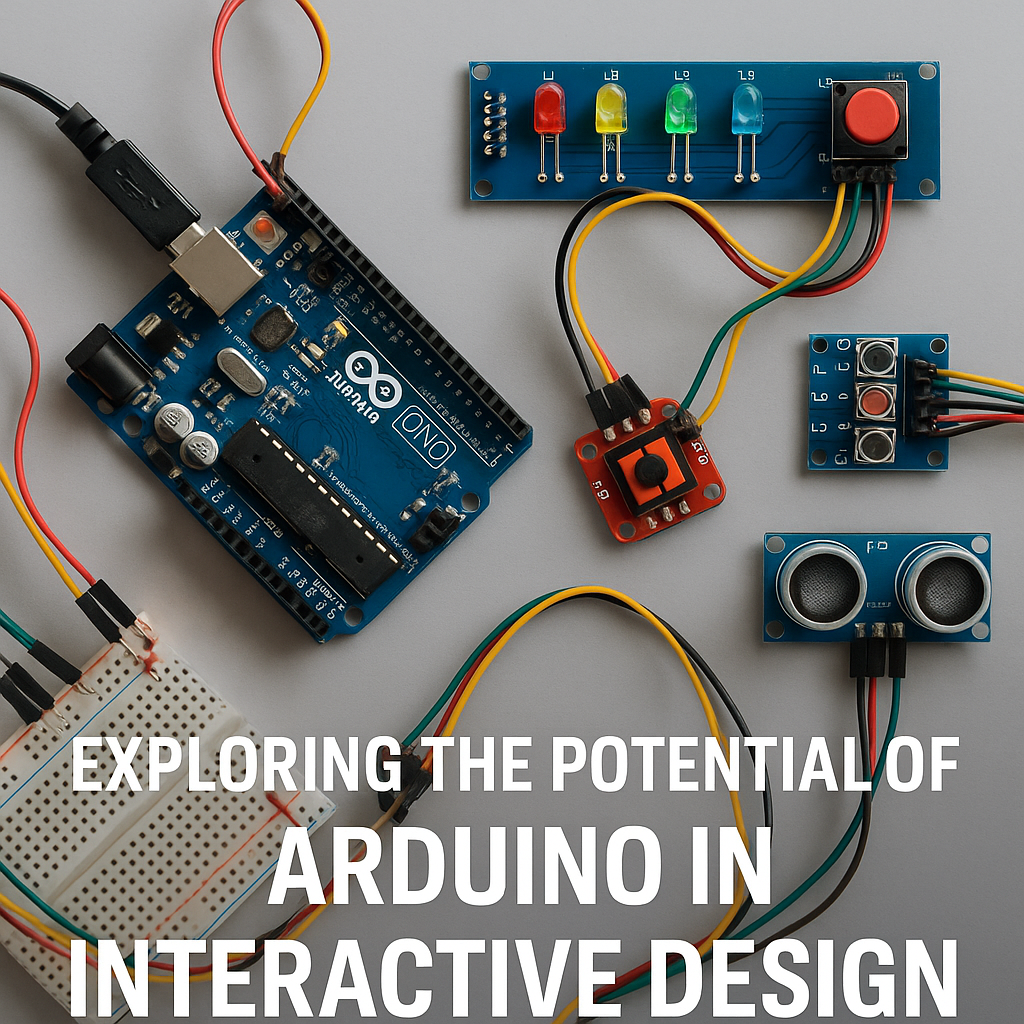
Arduino is an open-source electronics platform based on easy-to-use hardware and software. It consists of a physical programmable circuit board (often referred to as a microcontroller) and a piece of software, or IDE (Integrated Development Environment) that runs on your computer, used to write and upload computer code to the physical board.
Since its inception in the early 2000s, Arduino has been embraced by a vast community of designers, artists, hobbyists, and professionals for its simplicity, affordability, and flexibility. It can be used to develop interactive projects across various domains, including art installations, wearable technology, and smart homes.
Why Use Arduino in Interactive Design?
Arduino provides several benefits that make it ideal for interactive design:
- Ease of Use: The Arduino IDE is user-friendly and supports a wide range of programming languages, making it accessible to both beginners and advanced users.
- Extensive Community Support: With a large community of users, there are countless resources, tutorials, and forums available to help you overcome any challenges you might face.
- Wide Range of Applications: Arduino boards can be used for a plethora of projects, from simple LED blinkers to complex robotics and automation systems.
- Cost-Effective: Arduino boards are affordable, allowing designers to experiment and prototype without significant financial investment.
Applications of Arduino in Interactive Design
Arduino’s versatility allows it to be integrated into a wide array of interactive design projects. Here are a few notable examples:
- Interactive Installations: Artists and designers use Arduino to create interactive art installations that respond to user input, such as motion sensors, sound, or light.
- Wearable Technology: Arduino boards can be embedded into clothing and accessories to create smart wearables that track health metrics, display information, or even react to environmental changes.
- Smart Home Devices: Arduino can be used to prototype smart home devices that automate and enhance living environments, such as lighting systems, climate control, and security alarms.
- Robotics: Arduino is often utilized in the development of robots that can perform complex tasks, interact with their environment, and provide educational value.
Getting Started with Arduino
If you’re new to Arduino and eager to explore its potential in interactive design, the Arduino Starter Kit is an excellent place to begin. This kit includes a selection of the most common and useful electronic components, along with comprehensive instructions to help you get started on your first projects.
Whether you’re an artist looking to add an interactive element to your work, a designer aiming to innovate with new technology, or simply a hobbyist interested in electronics, Arduino offers a world of possibilities to explore.
Conclusion
Arduino has become an indispensable tool in the realm of interactive design, offering unparalleled flexibility and accessibility. By combining creativity with technology, Arduino empowers individuals to create projects that were once thought impossible, making the world of interactive design more dynamic and exciting than ever before.