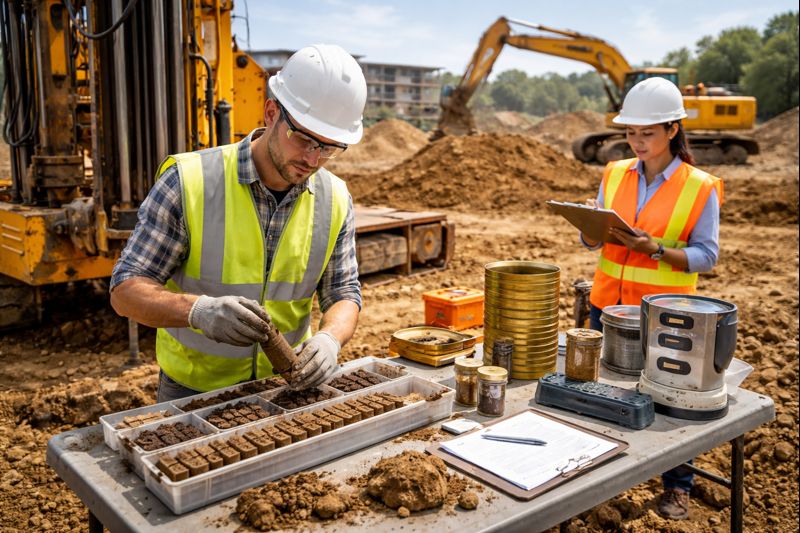
Soil testing paints a clear picture of what lies beneath the surface, giving engineers the information they need to design safely and confidently. Tennessee engineering firms depend on this information because every structure, roadway, and utility network in Tennessee rests on the behavior of the ground below.
Table of Contents
- 1 The Soil Strength Values That Guide Structural Support
- 2 Moisture Content Levels Shaping Foundation Decisions
- 3 Grain Size Profiles Defining Load-bearing Behavior
- 4 How Compaction Data Affects Long-term Ground Stability
- 5
- 6 The Density Measurements Engineers Use for Safe Design
- 7 Shear Resistance Findings That Prevent Slope Failure
- 8 Permeability Readings Influencing Drainage Planning
- 9 Subsurface Layering Details Vital for Site Preparation
The Soil Strength Values That Guide Structural Support
Soil strength determines how much weight the ground can carry without shifting or collapsing. Civil engineering services use strength values to understand the force a foundation can safely transfer into the earth. These measurements come from field tests and lab evaluations that show how soil responds under pressure from new loads.
Engineers compare strength values against the type of structure planned for the site. A civil engineering consultant uses this comparison to determine whether the soil can support the project as-is or if reinforcement is needed. This helps prevent settlement, uneven support, and structural instability long after the project is complete.
Moisture Content Levels Shaping Foundation Decisions
Moisture levels within soil affect its ability to hold weight, resist movement, and maintain shape. High moisture content weakens certain soil types, while low moisture can cause shrinkage or cracking. Tennessee engineering firms evaluate these levels to understand how seasonal changes may impact foundations over time.
Different soils react in unique ways as moisture shifts. Civil engineering and land development projects rely on accurate moisture data to choose the right foundation depth, drainage design, and mitigation strategies. These decisions prevent swelling, erosion, and long-term shifting that could compromise project integrity.
Grain Size Profiles Defining Load-bearing Behavior
Grain size analysis breaks soil into categories such as gravel, sand, silt, and clay. Each size range behaves differently under weight and water exposure. Civil engineering consultants study grain size distribution to predict settlement rates and how quickly water moves through the soil.
Engineers use these profiles to adjust their design plans. Coarse-grained soils offer higher drainage rates while fine-grained soils retain more water and compress over time. Understanding these traits helps Tennessee projects maintain stability from the ground up.
How Compaction Data Affects Long-term Ground Stability
Compaction testing determines how tightly soil particles sit together, which affects strength, settlement, and overall support. Civil engineering services review compaction levels to ensure soil beneath roads, pads, and structural foundations holds firm under heavy use. Proper compaction reduces voids that could later lead to sinking or shifting.
Engineers adjust compaction methods depending on soil type and site conditions. Tennessee engineering firms may recommend mechanical compaction adjustments, moisture conditioning, or soil replacement to achieve ideal density. These steps create a stable base that supports long-term performance and reduces maintenance needs.
The Density Measurements Engineers Use for Safe Design
Density testing verifies how much solid material occupies a given volume of soil. Higher density levels typically indicate stronger, more reliable soil conditions. Civil engineering and land development projects rely on this data to confirm whether the ground can hold steady under foundations, pavements, and heavy equipment.
Teams use density measurements to refine their construction plans. A civil engineering consultant analyzes the results to decide whether to strengthen the soil, adjust grading, or modify drainage paths. These adjustments minimize risk and improve project lifespan.
Shear Resistance Findings That Prevent Slope Failure
Shear resistance reveals how well soil can withstand forces that attempt to push it sideways. This measurement is particularly important for sites with elevation changes, retaining walls, or embankments. Tennessee engineering firms use shear data to determine how steep a slope can safely be without sliding or collapsing. Engineers incorporate shear resistance into their design of slopes and retaining systems. Civil engineering services often reinforce high-risk areas with support structures, drainage channels, or improved soil materials. These findings ensure hillsides and cut slopes remain stable under varying loads and weather conditions.
Permeability Readings Influencing Drainage Planning
Permeability measures how quickly water passes through soil. Soils with high permeability drain well but may not retain enough stability, while low-permeability soils hold water and may increase pressure on foundations. Civil engineering consultant teams analyze these readings to design effective water management systems. Permeability data influences everything from stormwater routing to subsurface drainage. Tennessee projects benefit from accurate testing because the right drainage plan helps prevent erosion, flooding, and foundation weakening. Sound water movement design keeps structures dependable even during heavy rainfall.
Subsurface Layering Details Vital for Site Preparation
Layers beneath the surface reveal transitions between different soil types, rock, and groundwater levels. Civil engineering and land development specialists rely on this information to understand excavation requirements, foundation depth, and potential hazards. Layering details also highlight areas where soil may change from stable to unstable within a short vertical distance. Understanding subsurface layering guides the entire preparation process. Tennessee engineering firms plan grading, cut-and-fill operations, and structural support systems based on these underground conditions. This ensures the site remains even, secure, and ready for the full build-out.
Engineers who work with this level of detailed soil information help reduce risk and improve project efficiency. Ivaldi Engineering provides civil engineering services that use soil data to create safer, more reliable designs across the Tennessee area.