Preserving historic log homes is a craft that balances the charm of rustic heritage with the demands of modern living. As new technologies and materials emerge, preservation specialists have developed innovative approaches to both restoration and functionality. Homeowners and builders alike can look to organizations like Log Masters Restorations for expertise on how to merge the best of both worlds: historical fidelity and present-day convenience. The result is a new era of log home preservation that honors unique architectural character while supporting sustainability and modern standards.
In the quest to keep these iconic structures standing for generations, updated preservation practices are as much about maintaining the past as about enhancing the future. Caring for an old log home is no longer just about replacing failing timbers—today it’s about climate-conscious updates, seamless technology integration, and creative design solutions. Modern trends ensure these homes are not only visually captivating but also eco-friendly and comfortable year-round.
As more property owners recognize the value of these structures, the demand for specialized restoration strategies grows. This expanding field draws on a blend of traditional expertise and forward-thinking tools to ensure each project meets 21st-century expectations without losing historical significance.
Preservation isn’t just about appearance—today’s upgrading techniques focus equally on longevity, livability, and respect for original craftsmanship. Experts agree that successful log home restoration results from careful planning and thoughtful partnerships between owners and experienced log home professionals.
Table of Contents
Blending Traditional Craftsmanship with Contemporary Design
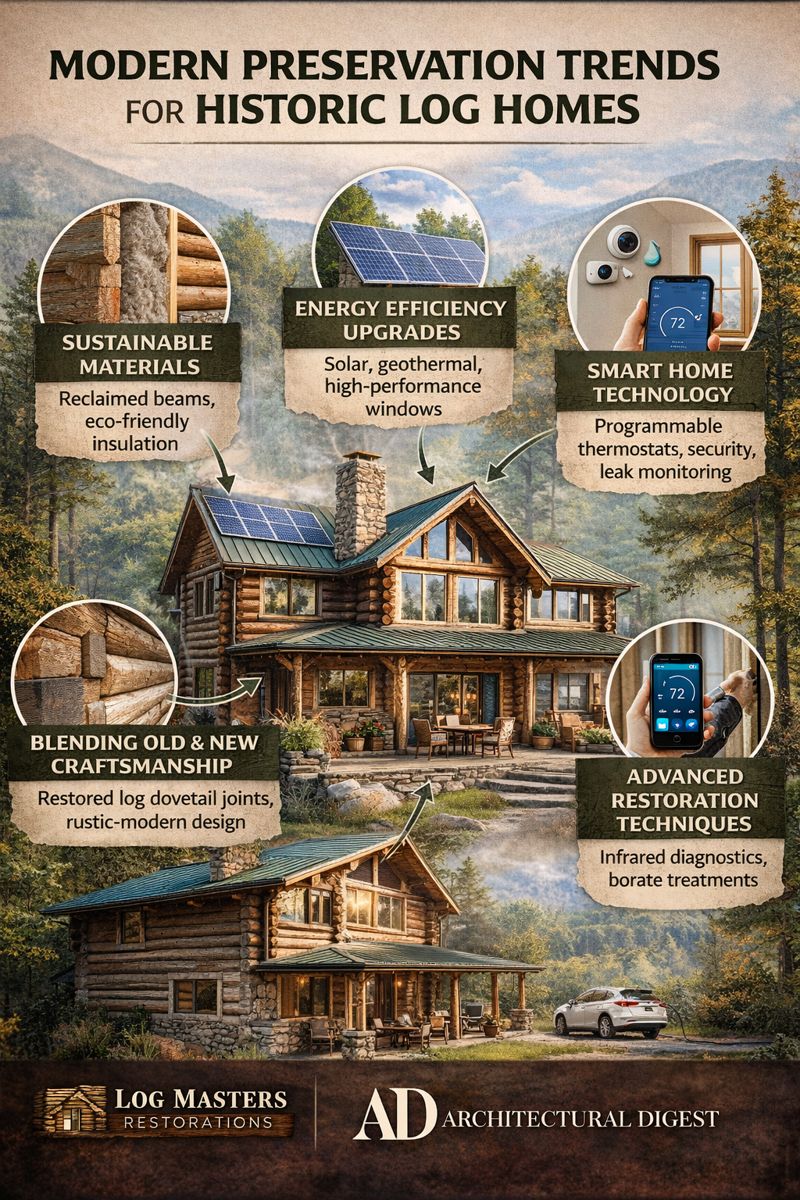
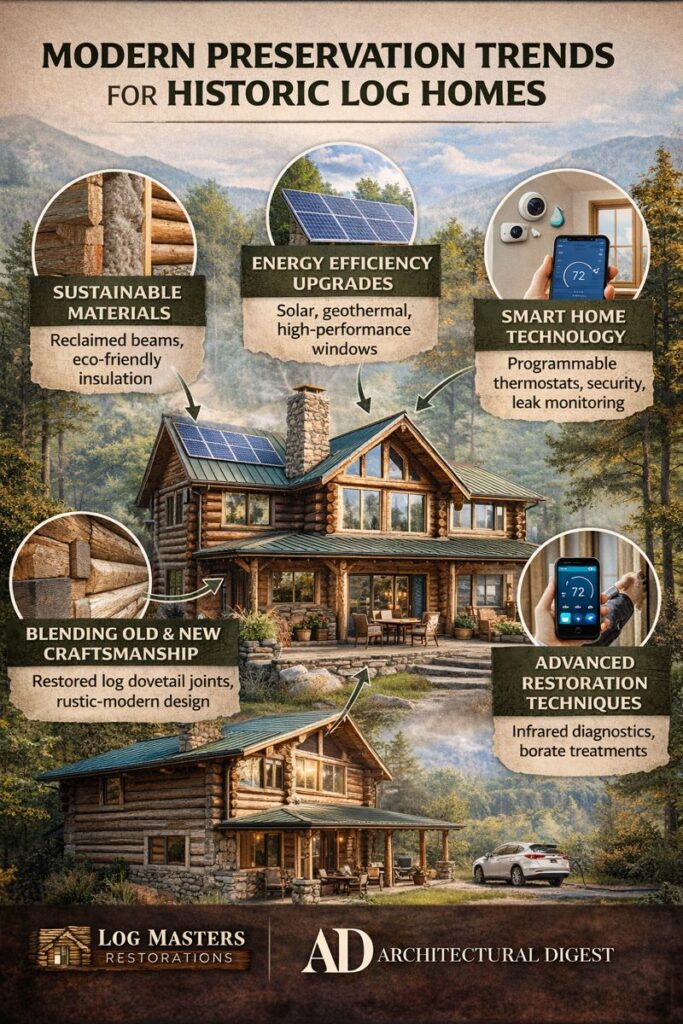
The hallmark of historic log homes is their enduring structure and classic aesthetic. However, modern homeowners often seek to infuse these spaces with up-to-date designs that allow for more light, open layouts, and energy efficiency. Incorporating floor-to-ceiling windows or glass doors, for example, maintains the rustic ambiance while connecting the interior to the surrounding natural landscape. Such touches make it possible to enjoy vistas, improved daylight, and seamless indoor-outdoor living—qualities increasingly in demand for both permanent residences and vacation retreats.
At the same time, the use of traditional dovetail joints, hand-hewn beams, and exposed timber remains a priority for restoration specialists. By thoughtfully blending old and new, architects and builders achieve a harmonious balance that does not sacrifice the authenticity of historic structures.
Embracing Sustainable Materials
Environmental consciousness shapes many modern restoration projects. One popular approach involves reclaiming century-old timbers or using wood sourced from sustainably managed forests. These materials are finished with natural oils or stains rather than synthetic coatings, preserving indoor air quality and the surrounding ecosystem. Further, integrating cellulose, sheep’s wool, or other natural insulations vastly increases energy efficiency over older filler materials.
This eco-friendly movement reflects a broader trend in home building, where both new builds and renovations increasingly pursue “green” certifications and standards. Historic log homes can now meet rigorous sustainability benchmarks without diluting their vintage character. This movement aligns with recommendations from major sources, such as Architectural Digest, and promotes innovative ways to honor and upgrade aging timber structures.
Integrating Smart Home Technology
The thoughtful addition of smart devices has become a cornerstone of contemporary log home renovations. Homeowners can install programmable thermostats, security cameras, and intelligent lighting systems that can be controlled via smartphones or voice-activated hubs. When selected and implemented with care, these technologies provide significant comfort and remote management abilities without compromising the visual harmony of the space.
Discreet wiring and wireless systems help blend modern convenience into log homes, maintaining clean lines and wood-rich interiors. In addition, energy monitoring tools, humidity sensors, and leak detectors may be tucked unobtrusively into walls or behind logs, safeguarding the structure against rot, pests, and inefficient energy use.
Utilizing Advanced Preservation Techniques
Restoration today relies on a suite of advanced diagnostic and repair tools. Infrared thermal imaging, for instance, pinpoints drafty zones or hidden water leaks without invasive removal of historic material. Endoscopes allow specialists to inspect the interior of logs for insect damage, rot, and insulation quality while preserving the external finish.
Specialized epoxies and borate treatments reinforce original logs against further decay, extending the building’s lifespan. Such innovative techniques let owners address problems at their source, resulting in more effective, durable restoration projects.
Incorporating Energy-Efficient Upgrades
Modernizing a historic log home increasingly includes integrating solar panels, energy-efficient windows, and tankless water heaters. Likewise, geothermal or air-source heat pumps provide sustainable, low-impact heating and cooling.
Strategic upgrades not only reduce the home’s carbon footprint but also lower overall utility costs. For more on sustainable home energy solutions, resources like The New York Times’ Wirecutter offer detailed explanations of smart, eco-friendly retrofits appropriate for historic properties.
Preserving Historic Integrity
The defining feature of effective preservation is the dedication to upholding a log home’s authentic character. Restoration experts carefully match replacement logs, chinking, or roof shakes to original construction, preserving not just the structure but also its cultural and regional legacy. Proper documentation, including photographs and detailed logs of materials and methods used, further supports a home’s historical significance.
This high standard ensures that restored log homes remain true to their roots, offering a tangible link to the past for future generations while benefiting from today’s best practices for comfort and efficiency.
Conclusion
Contemporary log home preservation is a multidimensional process that combines tradition with progress. Through the creative blending of old and new—artisanal building methods, cutting-edge technology, sustainable materials, and advanced diagnostics—these storied homes are prepared for a bright and enduring future. With informed planning and expert support, historic log homes can continue to inspire and shelter homeowners for decades to come.