
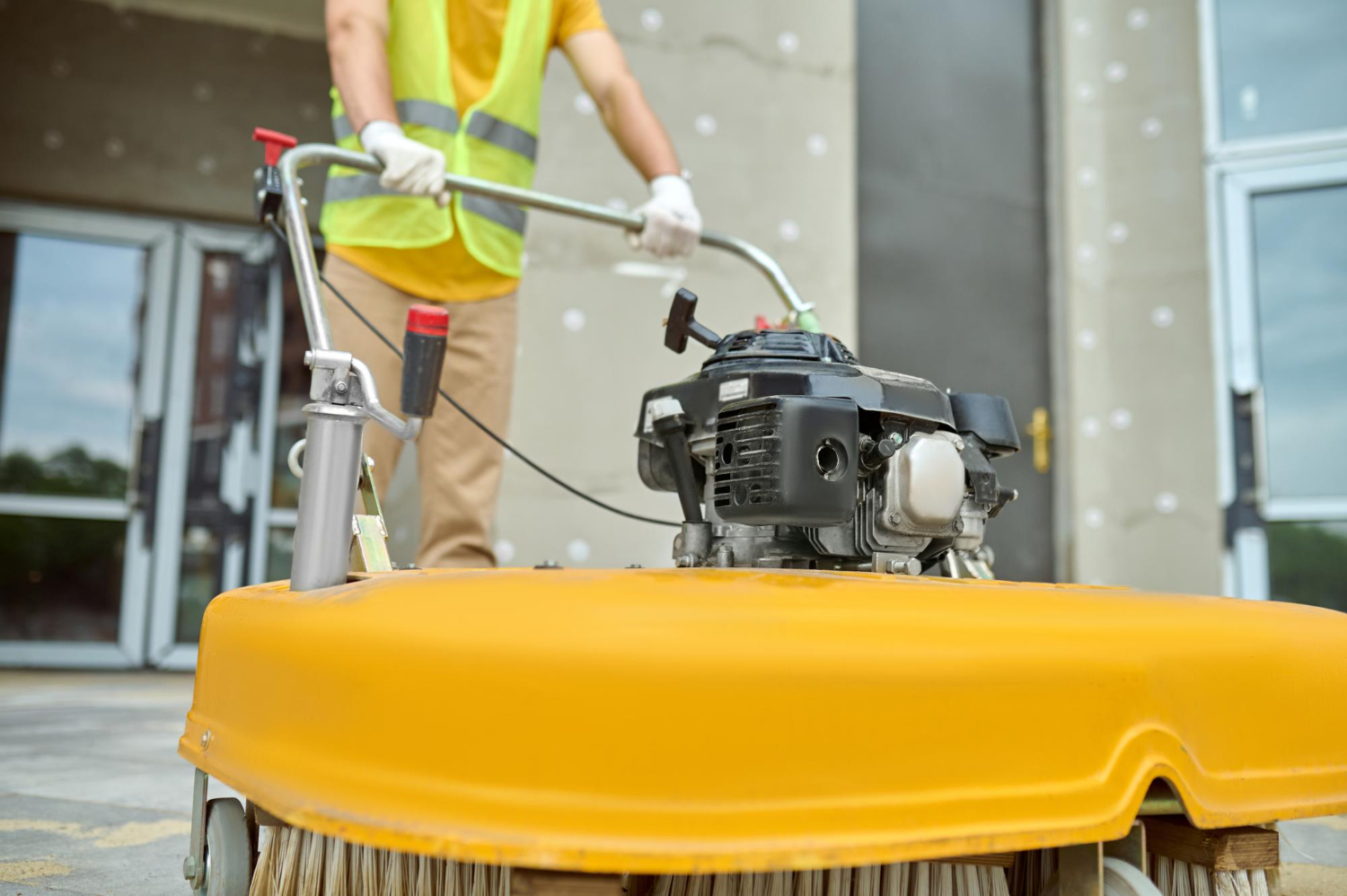
For businesses responsible for maintaining outdoor spaces, decisions around equipment are not just operational—they are financial. Patios and driveways require regular cleaning to maintain safety standards and visual appeal, but the methods used can significantly influence labour costs, asset longevity, and overall return on investment. While pressure washing remains a common solution, the introduction of surface cleaners has shifted the financial equation, offering a more efficient and cost-effective approach to large-area cleaning.
Reducing Labour Costs Through Efficiency
One of the most immediate financial benefits of surface cleaners is the reduction in labour time. Traditional pressure washing methods rely on narrow, concentrated jets that require careful, repetitive passes to achieve full coverage. This increases the time required to complete each job, particularly on larger surfaces such as commercial forecourts, car parks, or expansive patios.
Surface cleaners, by contrast, are designed to cover a wider area with each pass. Their rotating spray arms distribute pressure evenly across the surface, allowing operators to work more quickly without sacrificing quality. For businesses, this translates directly into reduced labour costs. Fewer hours spent on each task means more jobs can be completed within the same timeframe, improving workforce productivity and increasing revenue potential.
In high-volume operations, even small time savings per job can compound into significant financial gains over the course of a year. This makes surface cleaners not just a tool for convenience, but a driver of operational efficiency.
Protecting Assets and Reducing Long-Term Costs
Beyond labour efficiency, surface cleaners also contribute to asset protection, which has clear financial implications. Outdoor surfaces such as block paving, stone, and concrete represent long-term investments for property owners. Improper cleaning techniques—particularly those involving high-pressure, concentrated jets—can cause damage over time, leading to costly repairs or premature replacement.
By distributing pressure more evenly, surface cleaners reduce the risk of surface erosion, joint displacement, and material degradation. This helps preserve the integrity of the asset, extending its usable lifespan and reducing maintenance expenditure. For businesses managing multiple sites, the cumulative savings from avoiding repair work can be substantial.
In addition, consistent cleaning helps prevent the buildup of moss, algae, and debris that can contribute to long-term deterioration. Preventative maintenance is almost always more cost-effective than reactive repairs, and surface cleaners support this proactive approach.
Improving Service Quality and Revenue Potential
Consistency in results is another factor that directly influences financial outcomes. Uneven cleaning, streaking, or missed areas can lead to customer dissatisfaction and, in some cases, the need for repeat work. This not only increases costs but can also impact a company’s reputation and ability to secure repeat business.
Surface cleaners deliver a more uniform finish, reducing the likelihood of rework and ensuring a higher standard of presentation. For commercial clients, where appearance is closely tied to brand perception, this level of consistency is particularly valuable. Businesses that can reliably deliver high-quality results are better positioned to retain clients, justify premium pricing, and win new contracts.
From a financial perspective, this improves both revenue stability and growth potential. High-quality output reduces inefficiencies while strengthening the overall value proposition offered to clients.
Lowering Operational Waste and Hidden Costs
Another often overlooked financial benefit is the reduction in operational waste. Traditional pressure washing can generate significant overspray, scattering water, dirt, and debris beyond the intended cleaning area. This can create additional cleanup requirements, increasing both time and resource usage.
Surface cleaners are designed with enclosed housings that direct water downward, containing the cleaning process within a defined area. This reduces mess, minimises water waste, and limits the need for follow-up cleaning. For businesses, this means lower operational costs and more efficient use of resources.
In environments where cleanliness is critical—such as hospitality venues, retail spaces, or public areas—this controlled approach also reduces disruption and supports a more professional service delivery.
Evaluating Return on Investment
While surface cleaners represent an upfront investment, their financial value becomes clear when viewed through the lens of return on investment. The combination of reduced labour time, lower maintenance costs, improved service quality, and increased operational efficiency all contribute to a strong ROI over time.
For businesses, the key is to consider total cost of ownership rather than initial purchase price. Equipment that enables faster job completion, reduces the need for repeat work, and protects underlying assets ultimately delivers greater value than cheaper alternatives that may increase long-term costs.
Guidance from industry specialists such as Ron Smith highlights how integrating surface cleaners into regular maintenance workflows can enhance both efficiency and financial performance. By selecting the right tools and using them effectively, businesses can align their operations with broader cost management and profitability goals.
A Strategic Approach to Maintenance Investment
Surface cleaners are more than just an accessory—they represent a shift towards more financially efficient maintenance practices. In a business environment where margins, productivity, and asset management all play a role in decision-making, investing in the right equipment is essential.
By improving efficiency, reducing risk, and supporting higher service standards, surface cleaners enable businesses to approach patio and driveway maintenance as a strategic function rather than a routine expense. Over time, this approach leads to better financial outcomes, stronger client relationships, and more sustainable operations.