
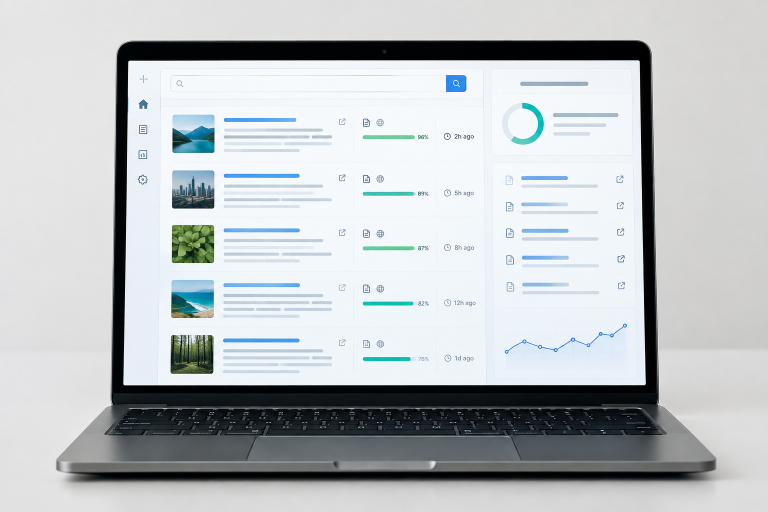
Web search is a core dependency for agents that research evolving topics, compare options, monitor events, or answer questions beyond their private knowledge bases. When comparing providers, a resource such as Exa vs Brave can be useful as an example of why teams should assess retrieval behavior for their own workflow rather than choose solely on feature lists.
A capable model cannot reliably compensate for weak retrieval. If an agent finds outdated, irrelevant, duplicated, or poorly supported material, it may produce an incomplete answer or take the wrong next step. Search quality, therefore, affects both the usefulness of the final response and the ability to audit it.
Table of Contents
- 1 Why Search Quality Matters For AI Agents
- 2 What AI Agents Need From Web Search
- 3 Key Factors To Compare
- 4 Build A Test Set From Real Tasks
- 5 Measure Relevance, Freshness, And Evidence
- 6 Balance Latency And Cost
- 7 Check Source Quality And Provenance
- 8 Add Safety And Permission Controls
- 9 Use A Production Readiness Checklist
- 10 Common Questions
- 11 Final Takeaway
Why Search Quality Matters For AI Agents
An agent researching a supplier, a product specification, or a new regulation must first locate pages that contain the needed facts. Poor ranking can bury the relevant source, while incomplete content extraction can omit the passage that changes the answer. Treat search as a decision-making input, not a generic utility added at the end of an agent workflow.
What AI Agents Need From Web Search
Agents usually need more than a list of links intended for human readers. They need predictable, machine-readable results that can be filtered, compared, cited, and passed to later steps without extensive cleanup.
- Relevant results near the top of the response.
- URLs, titles, publication dates, and short supporting passages.
- Filters for domains, language, location, and date ranges.
- Consistent fields, useful error messages, and retry behavior.
- Content that helps the agent determine whether a page supports a claim.
Key Factors To Compare
Use a scorecard that reflects the work your agent actually performs. Compare each candidate across the following areas:
- Relevance: Whether returned pages answer the query rather than merely repeat its keywords.
- Coverage: Whether the index can surface niche documents, company pages, technical material, and current reporting.
- Freshness: Whether results honor the requested time window.
- Response format: Whether output can move directly into the agent pipeline.
- Source detail: Whether every important claim can be traced to an original page.
- Latency, cost, and reliability: Whether the service remains practical under normal and peak demand.
Build A Test Set From Real Tasks
Generic search prompts rarely reveal how a provider will perform in production. Build a test set of roughly 50-100 representative requests from the intended application. Include simple lookups, ambiguous questions, recent events, product codes, named organizations, locations, and specialized terms. When possible, record the expected answer or at least one source that a successful search should find.
Also include difficult cases where the answer is not likely to appear in the first result. A smaller test set that mirrors real user requests is more useful for procurement and engineering decisions than a broad benchmark that does not resemble the agent’s job.
Measure Relevance, Freshness, And Evidence
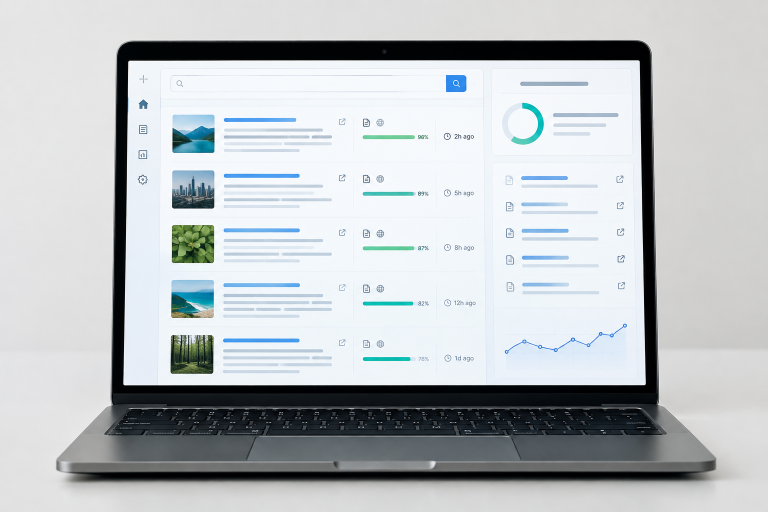
Keep the first evaluation simple enough to run repeatedly. Measure top-result relevance, top-five coverage, answer-bearing recall, freshness accuracy, duplicate rate, and evidence quality. Answer-bearing recall asks a practical question: did the returned text actually contain the fact the agent needed?
Evidence quality matters because a polished answer is not enough. Systems built around grounded AI responses can preserve a visible connection between generated statements and retrieved material, helping an application show users what informed the result.
Balance Latency And Cost
The lowest price per search request is not always the lowest cost per completed task. Account for search calls, page retrieval, extraction, storage, retries, and model tokens. Measure both the typical response time and the slower tail responses, since a single delayed request can hold up a multi-step workflow.
A customer support lookup may require a single search and a single answer. A research agent may search several times, read multiple pages, compare sources, and repeat a failed call. Set separate time and spending limits for each task type.
Check Source Quality And Provenance
Finding a page is not the same as finding a trustworthy source. Capture the publisher, author when available, publication or update date, original URL, and exact passage used for important decisions. For technical, legal, and policy questions, primary documents are generally preferable to summaries that repeat another source’s claims.
Source handling is also part of responsible system design. Discussions of safety, robustness, privacy, and system security in trustworthy agentic AI reinforce the need to preserve provenance, limit unnecessary data exposure, and ensure that critical agent behavior is reviewable.
Add Safety And Permission Controls
Web pages are untrusted input. Keep retrieved content separate from system instructions, and do not allow text on a page to redefine the agent’s permissions or objectives. Detect suspicious instructions, restrict access to sensitive tools and private data, and require human approval before actions with material financial, legal, or operational consequences. Log searches, retrieved pages, tool calls, and final decisions for review.
Use A Production Readiness Checklist
- Test with real user tasks and difficult edge cases.
- Define minimum relevance, freshness, and evidence standards.
- Set limits for time, cost, retries, and tool calls.
- Return source details for important answers.
- Monitor empty results, failures, and quality changes over time.
- Keep the search provider behind a replaceable interface.
- Plan a fallback for slow or unavailable search services.
Common Questions
What Is The Most Important Search Metric?
Answer-bearing recall is a strong starting metric because it tests whether the agent receives usable information. It should be considered alongside relevance, freshness, source quality, and latency.
Should Every AI Agent Use Web Search?
No. A stable internal workflow may be better served by approved documents or a private knowledge base. Web search is most useful when relevant information changes frequently or exists outside the organization.
How Many Providers Should A Team Test?
Testing three to five credible options is usually enough for an initial evaluation. The objective is to identify the best fit for the workload, not to compare every available service.
What Should Happen When Sources Conflict?
The agent should identify the disagreement, compare dates and source authority, avoid presenting uncertain claims as settled facts, and escalate significant decisions for human review.
Final Takeaway
The right web search layer depends on the agent’s assignment. Evaluate relevance, coverage, freshness, evidence, response format, cost, reliability, and security with realistic tasks. A disciplined evaluation process produces more useful answers, clearer audits, and safer agent behavior.