
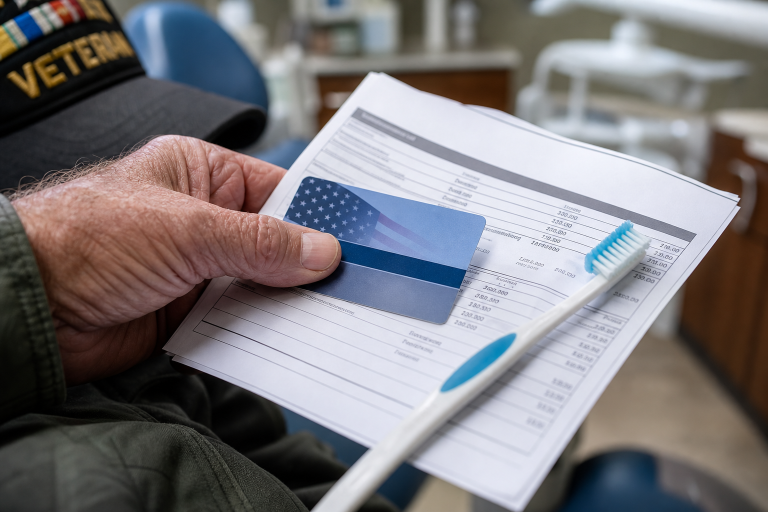
Dental care planning looks different for every Veteran, but the need to prepare applies in communities across every U.S. state. Whether a person lives near a large VA medical center, in a small town, or far from an in-network office, understanding likely costs before treatment is needed can make dental decisions less stressful. Eligible Veterans and certain CHAMPVA beneficiaries may explore the VA dental insurance program (VADIP) when comparing private dental coverage options.
Coverage is only one part of a practical dental plan. A complete approach includes confirming benefit eligibility, checking which dentists are available nearby, scheduling routine visits, and setting aside funds for services a plan may not fully pay for. Taking these steps in 2026 can help Veterans address dental needs before discomfort becomes an urgent and expensive problem.
Table of Contents
Why Dental Costs Deserve A Plan
It is easy to postpone a cleaning, an exam, or a conversation about a sensitive tooth when there is no immediate pain. However, dental concerns can become more complicated when they are left untreated. Depending on the diagnosis, treatment may involve preventive visits, fillings, periodontal care, root canal treatment, crowns, dentures, extractions, or emergency services. The cost can vary based on the procedure, the dentist, the location, and the coverage available.
A monthly insurance premium is not the full price of dental care. Veterans should also account for deductibles, copays or coinsurance, annual benefit maximums, services excluded by a plan, and charges that may apply when seeing an out-of-network provider. Planning ahead creates room to choose care based on needs rather than making a rushed decision during an emergency.
Dental Coverage Options Veterans May Consider
Veterans may have several paths to dental care. Some may qualify for VA dental benefits, while others may consider voluntary dental insurance, employer-sponsored coverage, an individual dental plan, community health centers, dental schools, or local charitable programs. VA dental eligibility is not automatically included with every VA health care enrollment. The VA dental eligibility rules describe benefit classes and the situations in which a Veteran may qualify for some or all needed dental care.
For Veterans who do not qualify for comprehensive VA dental care, VADIP may offer access to discounted private dental insurance. Enrollment eligibility and plan availability should be confirmed directly before selecting coverage. Veterans should also remember that dental insurance is generally separate from medical coverage, even when both are offered through the same employer or organization.
How To Compare Dental Plans
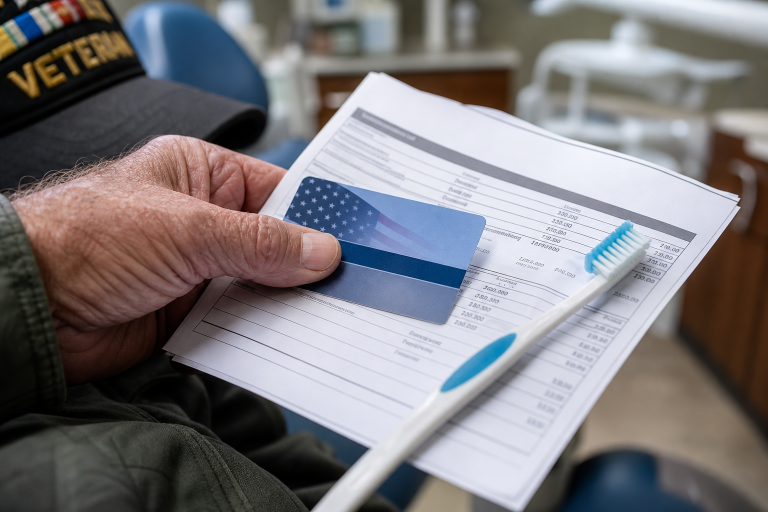
The lowest premium does not always produce the lowest total cost. A useful comparison starts with the services a person expects to need during the year. Someone who mainly wants exams and cleanings may prioritize preventive coverage and a nearby network. Someone who has been told they may need a crown, bridge, denture, or periodontal treatment should look more closely at major-service coverage and plan limits.
Items To Compare Before Choosing Coverage
- The monthly premium and the cost over a full year.
- Annual deductible and when it applies.
- Coverage for exams, cleanings, X-rays, and preventive services.
- Coverage levels for fillings, root canals, extractions, crowns, and dentures.
- Annual benefit maximum and whether it fits the anticipated treatment.
- In-network and out-of-network payment rules.
- Whether preferred dentists are accepting new patients.
Ask for a written treatment estimate if a dentist recommends substantial work. Then compare the estimate with each plan’s benefit summary. This makes it easier to identify the remaining out-of-pocket amount instead of relying on general coverage descriptions alone.
The Value Of Routine Dental Care
Routine dental visits give a dentist the chance to identify concerns early and discuss options before a problem becomes more severe. They also create a baseline record that can be useful when symptoms develop later. Regular home care matters between appointments, especially for Veterans managing dry mouth, diabetes, mobility limitations, tobacco use, or medications that may affect oral health.
Daily habits can support oral health at home. The National Institute of Dental and Craniofacial Research recommends that adults brush twice daily with fluoride toothpaste and clean between their teeth regularly. Additional practical habits include replacing worn toothbrushes, limiting frequent sugary snacks and drinks, and telling the dental team about medications, medical conditions, and changes in overall health.
How To Build A Simple Dental Care Budget
A dental budget does not need to predict every possible procedure. It should separate predictable spending from possible treatment costs. Start with the annual premium, then add estimated deductibles, copays, and the expected cost of two routine visits if they are not fully covered. A small emergency reserve can also help when a filling breaks, a denture needs repair, or pain requires a prompt appointment.
Suggested Budget Steps
- List monthly premiums and multiply them by 12.
- Review deductibles, copays, and the annual maximum.
- Confirm the cost of care with an in-network dentist.
- Keep treatment estimates and explanation-of-benefits statements.
- Set aside a realistic amount for services not covered by the plan.
Finding A Convenient Dental Provider
A plan has limited value if participating dentists are too far away or unavailable. Before enrolling, search the provider directory, call the office, and confirm network participation and new-patient availability. Veterans in rural areas should ask about travel distance, appointment wait times, accessibility features, emergency scheduling, and referrals to nearby specialists. A local Veterans Service Organization may also be able to point Veterans toward community resources.
Questions To Ask Before Enrolling
- Are routine exams, cleanings, and X-rays covered?
- What is the annual benefit maximum?
- How are emergency visits and out-of-network claims handled?
- What happens if a preferred dentist leaves the network?
- When does coverage begin after enrollment?
- Do spouses, dependents, or CHAMPVA beneficiaries have separate eligibility rules?
A Dental Care Checklist
- Confirm current VA dental eligibility.
- Compare available coverage choices and full annual costs.
- Check provider access before enrolling.
- Review annual plan limits.
- Schedule a routine exam and cleaning.
- Keep records, estimates, and receipts in one place.
- Reserve funds for uncovered treatment.
Final Thoughts
Dental care planning begins with a few clear steps: confirm eligibility, compare more than premiums, verify local provider access, and maintain preventive habits. For Veterans across the United States, a thoughtful plan can make it easier to protect oral health and prepare for dental expenses throughout 2026.