Table of Contents
- 1 Why There Is No Standard Pennsylvania Settlement Amount
- 2 Put Health And Emergency Care First
- 3 Report The Incident And Preserve Basic Facts
- 4 Document The Scene And Your Injuries
- 5 Track Treatment And Daily Limitations
- 6 Understand The Costs That Shape A Settlement
- 7 Handle Insurance Communications Carefully
- 8 Consider Fault And Pennsylvania Auto Insurance Rules
- 9 Watch For Deadlines And Complex Claims
- 10 Use A Practical 30-Day Checklist
- 11 Conclusion
Why There Is No Standard Pennsylvania Settlement Amount
People searching for the average personal injury settlement in Pennsylvania often want a quick number after a crash, a fall, a workplace incident, or another unexpected injury. The honest answer is that settlement values vary too widely for one statewide figure to be meaningful. A claim involving a few medical visits and a short recovery is different from one involving surgery, permanent limitations, lost career opportunities, or extensive rehabilitation.
A review with a Pennsylvania personal injury resource, such as quinnlawyers.com, can help an injured person focus on the facts that matter more than online averages. Settlement discussions are generally based on provable losses and risks, not on a universal formula. Two people with the same diagnosis may have very different claims if one misses months of work, needs ongoing care, or has stronger evidence of another party’s responsibility.
Put Health And Emergency Care First
The first priority after an injury should be safety and medical care, not building a claim. Call emergency services when needed, move away from traffic or another active hazard if it is safe to do so, and follow medical advice. Injuries involving the head, neck, back, chest, or abdomen may require prompt evaluation even when pain initially seems manageable.
Seeking appropriate care also creates medical documentation that may later help explain when symptoms began and how they changed. A person should be accurate with providers about the incident, symptoms, prior conditions, and work limitations. Medical records are strongest when they reflect consistent, timely communication rather than guesses about future recovery.
Report The Incident And Preserve Basic Facts
Report the event through the appropriate channel, such as calling the police after a motor vehicle collision, reporting a workplace injury, or notifying a property owner after a fall. In Pennsylvania, weather, wet leaves, snow, construction, uneven sidewalks, and traffic can affect evidence. Write down the date, time, location, witnesses, and contact info for responders. Note conditions that may be hard to reconstruct, like lighting, traffic, weather, hazards, and statements. Keep the description factual; a calm, factual account is more useful than speculation about fault.
Document The Scene And Your Injuries
When it is safe, photographs and videos can preserve details that may disappear quickly. Take wide views showing the overall location and closer images of damaged vehicles, torn clothing, broken equipment, visible injuries, skid marks, spills, stairs, lighting, warning signs, or other relevant conditions. Save original image files and back them up.
Do not place yourself in danger to collect evidence. Emergency treatment, avoiding traffic, and preventing further injury always come first. If another person can safely take photographs or retrieve personal property later, that may be a better option.
Track Treatment And Daily Limitations
A brief symptom and activity log helps understand injury impact. Record appointments, tests, prescriptions, therapy, pain, sleep issues, mobility, missed work, and difficulties. While not replacing medical records, it captures daily effects often missing in clinical notes. Keep attending appointments or inform your provider of legitimate absences. Unexplained gaps in care may hinder linking ongoing symptoms to the initial incident, but gaps alone don’t disqualify a claim.
Understand The Costs That Shape A Settlement
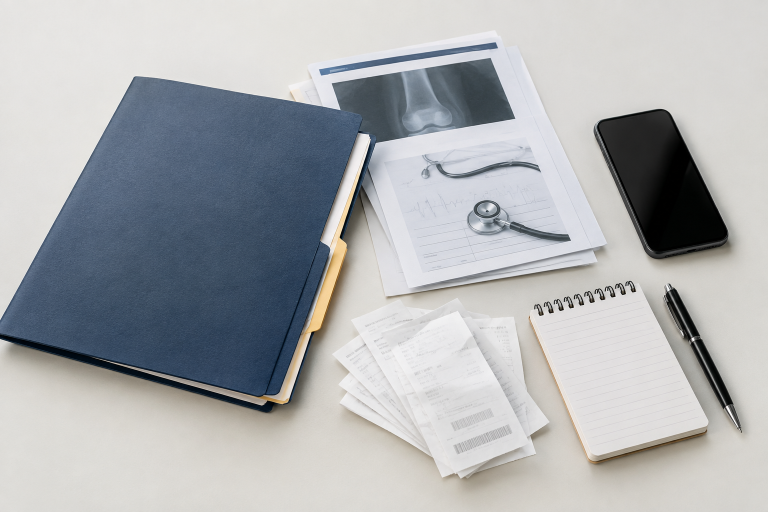
A personal injury settlement can cover more than emergency room bills. It may include medical expenses, treatment, prescriptions, therapy, lost wages, earning loss, transportation, household help, and property damage based on the case. Keep bills, receipts, pay stubs, tax forms, employer notices, work restriction forms, repair estimates, and treatment notes. For instance, a Pennsylvania worker with a leg injury might miss shifts, need rides to therapy, grocery help, and longer recovery. Documented effects can be more useful than average settlement figures.
Handle Insurance Communications Carefully
An insurance adjuster may request a recorded statement, medical authorization, or early settlement discussion. Be truthful, but avoid guessing about facts, minimizing symptoms before treatment is complete, or signing documents that are not understood. Keep notes of every conversation, including the date, name of the representative, claim number, and what was discussed. A release can end a claim. Before accepting an offer, consider whether all treatment has been identified, whether work restrictions may continue, and whether outstanding medical bills or reimbursement claims need attention. A fast payment can be useful in some situations, but it may not account for future costs that are not yet known.
Consider Fault And Pennsylvania Auto Insurance Rules
Shared fault can lower the value of a Pennsylvania injury claim, especially if the injured person is partly responsible. Disputes over speed, visibility, distracted driving, warnings, maintenance, and witness credibility can impact negotiations. For car accident claims, the policyholder’s tort election matters. Pennsylvania’s limited-tort and full-tort options influence recovery of non-economic losses, though exceptions may apply. Reviewing the policy is crucial before estimating a claim’s value.
Watch For Deadlines And Complex Claims
Many Pennsylvania injury claims have a two-year limit under the state’s law. The start date, exceptions, and notice rules vary by claim type. Government claims, wrongful death, product liability cases, and multi-defendant actions may require additional review. Don’t wait until the deadline to collect records or assess options, as key evidence such as footage, vehicle data, witness statements, and property details can be lost early on.
Use A Practical 30-Day Checklist
During The First 24 Hours
- Get emergency medical care when appropriate.
- Report the incident to the police, an employer, or a property representative.
- Collect witness information and take safe photographs.
- Save damaged clothing, equipment, and relevant paperwork.
During The First Week
- Attend follow-up appointments and follow treatment instructions.
- Start a symptom, treatment, and activity log.
- Create separate folders for medical, work, incident, and insurance records.
- Notify an employer about missed time or restrictions.
During The First Month
- Request missing records and itemized bills.
- Track every out-of-pocket expense.
- Review insurance correspondence carefully.
- Consider whether future treatment, income loss, fault disputes, or deadlines make the claim more complex.
Conclusion
There is no dependable average personal injury settlement for every Pennsylvania case. The more useful question is whether the available evidence fully shows the injury, financial losses, daily limitations, fault issues, and insurance coverage involved. Prompt medical care, organized records, careful communication, and early attention to deadlines can put an injured person in a better position to realistically evaluate a settlement offer.