A collision is stressful under any circumstances, but it can become especially complicated when the other driver has no insurance or does not carry enough liability coverage to pay for the harm they caused. Repair estimates, medical appointments, missed work, towing, and temporary transportation can create pressure quickly. Understanding your own uninsured motorist insurance before accepting money or making decisions can help you protect your options.
The right next steps depend on the facts of the crash, the coverage on your policy, and the law in your state. Focus first on safety and documentation. Then report the claim promptly, keep records organized, and ask your insurer which coverages may apply. Do not assume that the other driver’s lack of insurance means you have no path to payment.
Table of Contents
- 1 Why This Type Of Crash Creates Extra Stress
- 2 What To Do At The Crash Scene
- 3 Evidence That Can Strengthen A Claim
- 4 The Coverage Terms Drivers Should Know
- 5 Which Accident Costs May Be Covered
- 6 How To Start The Claims Process
- 7 Common Mistakes That Can Make A Claim Harder
- 8 Why State Rules Matter
- 9 A Simple Post-Crash Checklist
- 10 Final Takeaway
Why This Type Of Crash Creates Extra Stress
An uninsured-driver crash can leave an injured person trying to recover losses without a straightforward liability claim against the at-fault driver’s insurer. Underinsured-driver claims can be just as challenging because there may be some liability coverage, but not enough for the full loss. The Insurance Information Institute notes that about one in eight drivers lacks auto coverage, despite insurance requirements in most states. Its overview of protection against uninsured motorists also explains that available coverage varies by state and insurer.
That variation matters. A deductible, policy limit, notice deadline, or police-report requirement may affect a claim. Read the declarations page and policy language, and ask direct questions instead of relying on assumptions from a prior accident or advice from someone in another state.
What To Do At The Crash Scene
1. Check For Injuries And Get To Safety
Call 911 if anyone is injured, traffic is blocked, a vehicle cannot be moved safely, or the other driver leaves the scene. If possible, move out of moving traffic without creating a new hazard. Some injuries do not feel serious immediately, so seek medical evaluation when symptoms develop, or emergency responders recommend it.
2. Contact Law Enforcement
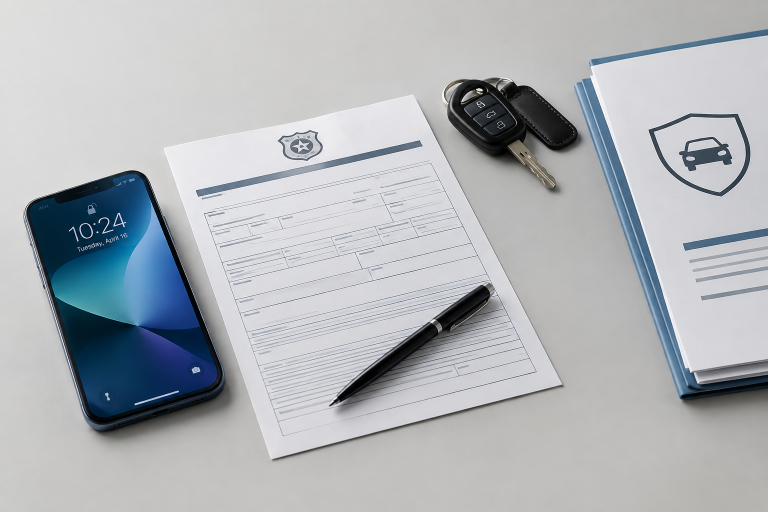
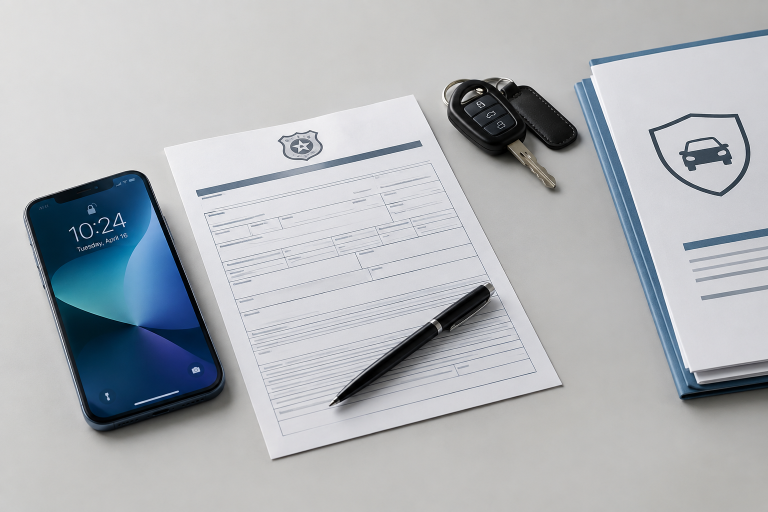
A police report can document the time, location, vehicles, witness information, and initial accounts of what occurred. Before leaving, ask for the report number and the name of the agency that responded. A report does not automatically decide fault, but it can become important evidence during an insurance review.
3. Avoid Promises And Admissions
Exchange information calmly, but do not agree to a cash payment before the full damage and any injuries are known. Avoid admitting fault or guessing about speed, distance, or what another driver did. State the facts to the police and your insurer as clearly as you can.
Evidence That Can Strengthen A Claim
Evidence is often easiest to collect at the scene and in the days immediately afterward. Save copies in a dedicated folder, cloud drive, or email thread so important details do not disappear.
- Photographs of all vehicles, damage, license plates, debris, road signs, signals, and visible injuries.
- Dashcam clips, phone video, and contact details for nearby businesses that may have relevant video.
- Names and phone numbers for independent witnesses.
- The other driver’s identification, contact information, vehicle details, and insurance information, if provided.
- Medical records, prescriptions, repair estimates, towing invoices, storage bills, and rental receipts.
- A dated written timeline describing what happened before, during, and after the collision.
The Coverage Terms Drivers Should Know
Uninsured Motorist Bodily Injury Coverage
Uninsured motorist bodily injury coverage, often called UM or UMBI, may help pay injury-related losses when an at-fault driver has no applicable liability insurance. Depending on the policy and state law, it may address medical treatment, rehabilitation, lost income, and services needed because an injury limits normal activities.
Underinsured Motorist Coverage
Underinsured motorist coverage, often called UIM, may apply when the at-fault driver’s liability limit is lower than the covered loss. For example, a driver may have liability insurance, but a serious injury claim can exceed that policy’s available limit. Whether UIM pays, and how much it pays, depends on the policy terms and applicable state rules.
Uninsured Motorist Property Damage, Collision, And Medical Coverage
Uninsured motorist property damage coverage may help with vehicle damage where it is offered. Collision coverage can also be relevant, although a deductible may apply. Medical payments coverage and personal injury protection may help with eligible treatment costs regardless of who caused the crash, subject to policy limits and state-specific rules.
Which Accident Costs May Be Covered
No single type of coverage pays every loss in every situation. Still, a claim may involve vehicle repairs or actual cash value after a total loss, emergency and follow-up care, prescriptions, physical therapy, lost wages, towing, storage, rentals, and transportation. Certain injury claims may also include non-economic damages where allowed by law and covered under the applicable policy.
How To Start The Claims Process
- Notify your insurer promptly. Provide basic facts and the other driver’s known information.
- Give the police-report details. Share the report number and responding agency.
- Submit supporting records. Include photographs, bills, estimates, wage documentation, and witness contacts.
- Ask about deadlines. Confirm notice requirements, proof-of-loss forms, inspection instructions, and any consent-to-settle rule.
- Track communications. Keep claim numbers, adjuster names, dates, and copies of all documents.
- Review settlement documents carefully. Do not sign a release until you understand what claims and future payments it affects.
Common Mistakes That Can Make A Claim Harder
- Waiting too long to report the collision.
- Leaving without gathering witness or vehicle information when it is safe to do so.
- Delaying medical attention after symptoms appear.
- Repairing or disposing of the vehicle before documenting damage and following inspection instructions.
- Posting details about the crash, injuries, or claim on social media.
- Taking a quick payment before the scope of the loss is clear.
- Ignoring letters, calls, or requests for documents from the insurer.
Why State Rules Matter
Uninsured and underinsured motorist rules are not uniform across the United States. States can differ on whether coverage must be offered or included, how a rejection must be handled, whether stacking is permitted, how hit-and-run claims are treated, and which filing deadlines apply. A move to another state can also change how a policy works at renewal. Check your current policy and your state insurance department’s consumer guidance before relying on any general rule.
A Simple Post-Crash Checklist
- Call 911 when needed and seek medical care for injuries or delayed symptoms.
- Take photographs, identify witnesses, and save the police-report number.
- Notify your insurer as soon as practical.
- Keep receipts, medical records, estimates, and claim communications together.
- Ask specifically about UM, UIM, collision, medical payments, and personal injury protection.
- Confirm deadlines before settling or releasing a claim.
Final Takeaway
A crash with an uninsured or underinsured driver does not have to become a paperwork maze. Quick reporting, careful evidence collection, organized records, and a close review of the policy can help you make informed decisions. The best time to learn what your coverage does is before a collision happens, but the next best time is immediately after one.