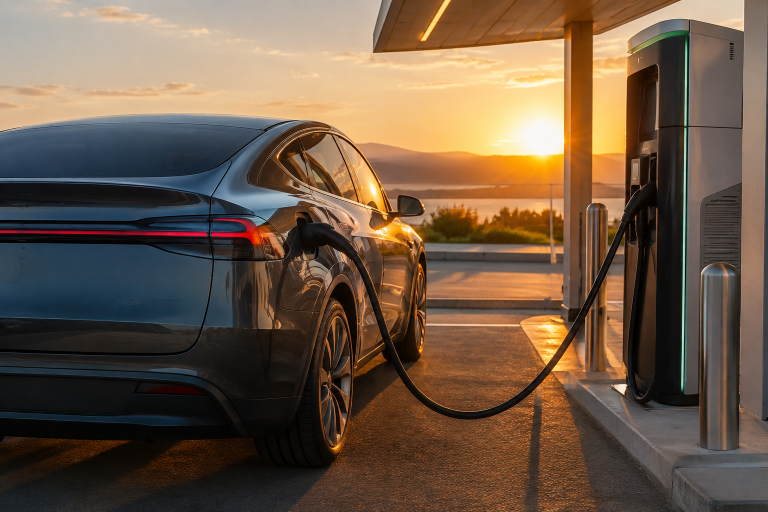
EV charging is not a one-speed process. Some drivers need a dependable overnight home refill, while others need enough energy to continue a highway trip after a short break. Understanding what DC fast charging means for EV drivers makes it easier to match the charging method to the trip instead of automatically seeking the fastest available plug.
The best charging choice depends on where the vehicle is parked, how far it must travel before the next stop, the vehicle’s charging limits, and the cost of electricity. A practical plan usually combines slower charging for routine driving with faster public charging when time and distance make it worthwhile.
Table of Contents
- 1 How the Main Charging Levels Compare
- 2 What Controls Real-World Charging Speed?
- 3 When DC Fast Charging Makes Sense
- 4 When a Slower Charger Is the Better Choice
- 5 How to Plan a Better Fast-Charging Stop
- 6 Connectors, Costs, and Battery Care
- 7 Public Charging Trends to Watch in 2026
- 8 Common Questions About DC Fast Charging
- 9 A Simple Charging Decision Checklist
- 10 Choose the Right Tool for the Trip
How the Main Charging Levels Compare
Level 1 Charging
Level 1 charging typically uses a standard household outlet. It is the slowest common method, but it can be useful for low-mileage drivers, plug-in hybrids, and situations where the vehicle sits for extended periods. It also provides a practical backup option when no dedicated charging equipment is available.
Level 2 Charging
Level 2 equipment uses a higher-power AC connection and is commonly installed in homes, workplaces, apartment properties, hotels, and public parking locations. For many all-electric vehicles, Level 2 is a strong fit for overnight charging because it can replenish a substantial amount of energy while the vehicle is already parked. The U.S. Department of Energy explains that Level 2 can generally charge a fully depleted all-electric vehicle overnight, although actual time varies by vehicle and equipment.
DC Fast Charging
DC fast charging delivers direct current to the battery via high-power equipment, bypassing the vehicle’s onboard AC conversion. It is designed for shorter stops and can be valuable on travel corridors, near shopping areas, and at sites serving drivers with limited time. Charging time still varies widely, so drivers should focus on the range needed for the next leg rather than expecting every session to follow the same schedule.
What Controls Real-World Charging Speed?
The number printed on a charger is only part of the story. A 350-kilowatt station cannot make an EV charge at 350 kilowatts if the vehicle is designed to accept less power. Real charging performance is shaped by several factors:
- Vehicle charging limit: Each model has its own maximum AC and DC charging capability.
- Battery size and design: Battery capacity affects how much energy is needed and how a vehicle manages charging.
- State of charge: Charging commonly slows as the battery approaches a high charge level.
- Battery temperature: Very hot or cold batteries may charge more slowly until the vehicle’s thermal system brings them into a suitable range.
- Shared station power: At some locations, two connected vehicles may share available power.
When DC Fast Charging Makes Sense
Fast charging is most valuable when time matters. It can make long-distance travel more manageable by allowing drivers to add energy during meal, restroom, or rest breaks. It also helps apartment residents, rideshare drivers, delivery drivers, and others who cannot rely on a private charger at home.
A balanced routine often works best. For example, a driver might charge at home or work during the week, then use DC fast charging for a weekend highway trip. This approach reduces the need to make public charging a separate daily errand while preserving fast charging for situations where it delivers a clear benefit.
When a Slower Charger Is the Better Choice
Faster is not always better. If a vehicle will remain parked for several hours, Level 2 charging can be the more convenient and potentially lower-cost choice. It fits naturally into overnight parking, a workday, a hotel stay, or a longer shopping trip.
- Use Level 1 when driving needs are modest and the vehicle has ample time to charge.
- Use Level 2 for predictable daily mileage and longer parking periods.
- Reserve DC fast charging for travel, urgent needs, or limited dwell time.
How to Plan a Better Fast-Charging Stop
- Confirm compatibility: Check the vehicle’s connector type and whether an approved adapter is required.
- Set a realistic charging target: Stopping at a lower percentage may save time if it provides enough range to reach the next planned charger.
- Review live station details: Use the vehicle or charging network app to check operating status, open stalls, pricing, and access hours.
- Keep a backup: Identify another compatible station nearby, especially on rural routes or during busy travel periods.
- Move promptly when finished: Freeing the space helps other drivers and may prevent idle fees where they apply.
Connectors, Costs, and Battery Care
North American EV drivers may encounter CCS and NACS connectors, along with equipment that supports one or both. Compatibility depends on the vehicle, model year, charging provider, and any adapter approved for that vehicle. Check the owner’s manual and the charging app before relying on a location.
Charging costs can also change the best decision. Home electricity rates, time-of-use pricing, public per-kilowatt-hour pricing, connection fees, membership programs, and idle fees may all affect the total. Comparing expected trip costs rather than focusing only on charging speed leads to better choices. Drivers can also use the vehicle efficiency and charging information available through FuelEconomy.gov to better understand how electricity use relates to their model.
Battery care does not require rigid rules. Drivers usually do not need to charge to 100 percent before every routine trip, and a partial charge may be sufficient for normal use. Follow the vehicle manufacturer’s guidance, particularly for recommended daily charge limits, cold-weather operation, and planned long-distance travel.
Public Charging Trends to Watch in 2026
Public charging is increasingly focused on more than the number of plugs at a site. Drivers benefit most from reliable equipment, accurate status information, clear pricing, accessible layouts, lighting, straightforward payment, and nearby services. Larger charging hubs and improved route-planning tools can help make longer EV trips easier, but a dependable backup plan remains valuable.
Common Questions About DC Fast Charging
Is DC fast charging only for road trips?
No. It can also be useful for drivers without home charging, high-mileage commuters, and commercial vehicles. However, Level 2 may be more convenient when the vehicle will be parked for hours.
Does a high-power charger make every EV charge faster?
No. The vehicle’s battery system controls the rate at which it accepts, and the charging speed can decline as the battery fills.
Why does charging slow near the end?
Vehicles commonly reduce charging power at a high state of charge to manage the battery. Temperature and power sharing can also affect the rate.
A Simple Charging Decision Checklist
- How far will the vehicle travel before its next charging opportunity?
- How long will it be parked?
- Which connector and adapter, if any, does it need?
- What is the vehicle’s maximum charging rate?
- Is the station working, available, and within the planned budget?
- Is there a compatible backup charger nearby?
Choose the Right Tool for the Trip
Smart EV charging is about matching the method to the moment. Level 1 and Level 2 can handle many everyday needs with minimal disruption, while DC fast charging can make quick top-ups and longer trips far more practical. By checking vehicle limits, connector compatibility, station status, pricing, and route distance before stopping, drivers can spend less time waiting and get more value from every charge.