Smart technology has gradually moved beyond phones, televisions and heating systems and into the garden. Robotic lawn mowers, automated irrigation, app-controlled lighting and connected outdoor equipment are increasingly marketed as tools that can make home maintenance easier. For homeowners, though, the more important question is whether these products actually reduce costs or simply introduce another expensive layer of technology.
The answer depends heavily on the size of the garden, the amount of work involved and how much of that work is currently being paid for. Smart garden equipment tends to make the strongest financial case where it replaces a repetitive task that consumes either significant time or regular labour costs. Where the job is already quick and inexpensive, automation can be much harder to justify.
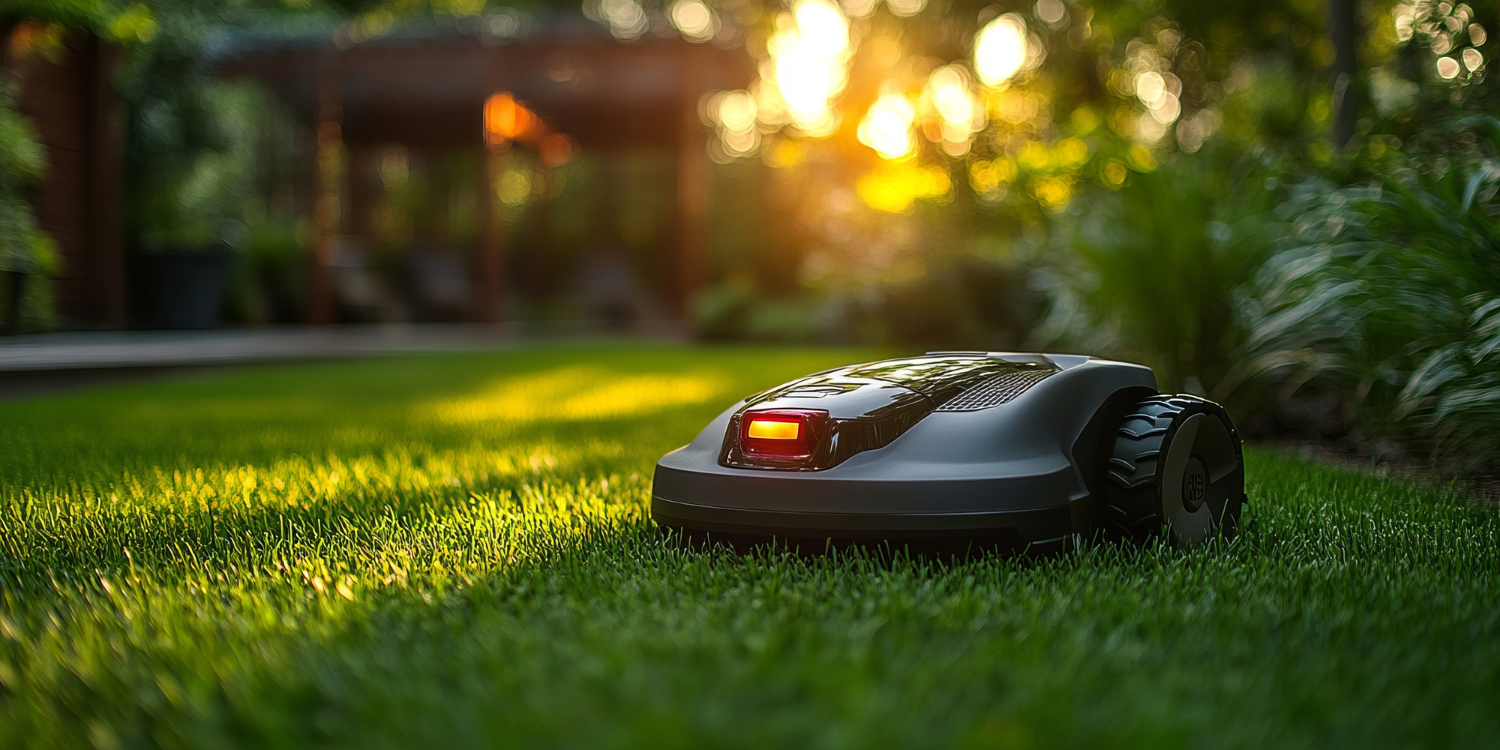
One of the clearest examples is lawn mowing. A small lawn that takes ten or fifteen minutes to cut every couple of weeks does not create much of a financial problem. A large garden, however, can require hours of work across the growing season, particularly if the lawn is divided into several areas or has an awkward layout. If the homeowner pays a gardener to deal with that work, the cost can become substantial over the course of a year. In that situation, a robot mower starts to look less like a gadget and more like a long-term labour-saving investment.
The important point is that purchase price alone gives an incomplete picture. A conventional mower may cost far less upfront, but it still requires somebody to operate it. A robotic mower carries a higher initial cost, yet it can take over much of the routine cutting once installed. That does not mean lawn care disappears completely, because edges, occasional manual cutting and general maintenance may still be required, but the number of hours devoted to mowing can fall considerably.
This is where the type of technology involved starts to matter. Traditional robotic mowers usually depend on a perimeter wire to define the lawn, while newer machines can use RTK positioning and virtual mapping. Retailers such as Garden Machinery Direct highlight the distinction between these systems when discussing complex gardens, because the physical layout of a property can have a direct impact on both installation effort and long-term flexibility. A simple rectangular lawn may be perfectly suited to a wired system, while a more complicated garden with multiple mowing zones, narrow passages or changing boundaries may benefit more from virtual mapping.
From a financial perspective, the extra cost of advanced navigation only makes sense if it solves a genuine problem. Paying more for RTK technology on a small, uncomplicated lawn may add very little practical value. In a garden where laying and later adjusting perimeter wire would be difficult, however, the ability to change boundaries in software can reduce future installation work and make the system easier to adapt if the landscaping changes.
Time is another part of the equation that is easy to underestimate because it does not always appear as a direct expense. A homeowner who spends two hours mowing every weekend may not be paying anybody, but those hours still have value. Over a long mowing season, that can amount to a significant share of free time. For someone who enjoys mowing, there may be no reason to automate it. For somebody who sees it purely as a chore, the convenience of handing the task over to a robot may form a meaningful part of the value calculation.
The same principle applies to other forms of smart garden technology. Automated irrigation, for example, can reduce the amount of manual watering required and may help avoid waste if the system is programmed properly. In a large garden with extensive planting, that can save time and potentially reduce unnecessary water use. In a small garden with a few containers and borders, an elaborate connected irrigation system may add cost without producing enough benefit to justify the investment.
Running costs also need to be considered carefully. Battery-powered equipment avoids the ongoing purchase of petrol, but it still uses electricity and will eventually need replacement batteries or other parts. The most useful comparison is therefore not between the purchase prices of two products, but between their likely total costs over several years. That means including installation, charging, maintenance, repairs and replacement components, as well as any labour or fuel costs the technology may eliminate.
Repairability can make a major difference to whether smart equipment proves economical. A product that becomes effectively unusable because a battery fails or a replacement part is unavailable can be poor value even if it performs well initially. Homeowners should therefore look at warranty terms, access to servicing and the availability of spare parts before buying. A more expensive machine that can be repaired and kept in use for many years may ultimately cost less than a cheaper model that needs replacing after a relatively short period.
Connected products also introduce another consideration: software support. A robot mower or smart irrigation system may remain mechanically sound, but some of its features can depend on an app or online service. Buyers should therefore think about the long-term support offered by the manufacturer, particularly when the product is expected to remain in use for several years. Technology that becomes difficult to operate because an app is no longer maintained can lose much of the value that justified the original purchase.
Garden size remains one of the most important factors in all of this. Smart equipment tends to offer the clearest financial advantage where the workload is substantial enough to create a real burden. Large lawns, multiple mowing zones and extensive planted areas provide more opportunity for automation to save time or reduce labour costs. In smaller spaces, conventional equipment may still be the more economical and straightforward choice.
There is also a danger in automating tasks simply because the technology exists. Smart products can be attractive because they promise convenience, but every connected device also adds something else to maintain, repair and eventually replace. The best approach is often to identify the parts of garden care that create the greatest recurring cost or take the most time and consider automation there first, rather than trying to make every outdoor task smart at once.
Flexibility can strengthen the long-term case for some newer systems. A virtual-boundary mower may be easier to adapt if the garden is redesigned, while a zoned irrigation system can be reconfigured when planting changes. The ability to adjust equipment instead of replacing it can extend its useful life and reduce the need for additional spending later.
Smart garden technology can therefore change the economics of home maintenance, but not automatically. Its value depends on whether it reduces a genuine cost, saves a meaningful amount of time and remains useful for long enough to justify the initial investment. For some homeowners, especially those with larger or more demanding gardens, automation may offer significant long-term benefits. For others, traditional tools will continue to be the better financial choice.
The most sensible decision starts with the garden rather than the technology. Work out which tasks consume the most time or money, consider how often they need to be done and then assess whether automation can genuinely improve the situation. When smart equipment solves a real maintenance problem and remains serviceable for years, it can earn its place. When it merely adds complexity to a simple job, the smarter financial decision may be not to buy it at all.