
For many households, a vehicle is less about a single big purchase and more about how smoothly it supports hundreds of ordinary moments. Families comparing options can learn more about practical vehicle choices while keeping their own routines, passenger needs, and storage demands at the center of the decision.
The right fit may be a compact SUV, minivan, wagon, pickup, or larger crossover. What matters most is whether the layout, controls, and features make daycare drop-offs, grocery runs, carpools, appointments, and weekend activities more manageable.
Table of Contents
- 1 Start With Daily Routines
- 2 Look for Safety Features That Support Drivers
- 3 Check Car-Seat Fit and Rear-Seat Access
- 4 Choose Flexible Storage Solutions
- 5 Prioritize Comfort and Climate Control
- 6 Use Connectivity Without Added Distraction
- 7 Prepare for Road Trips and Weather Changes
- 8 Test the Features Before Buying
- 9 Make the Final Choice With Real Life in Mind
Start With Daily Routines
Begin by listing what happens during a normal week. Consider how often adults drive children to school, how many passengers ride along, whether a stroller stays in the cargo area, and how frequently the vehicle carries groceries, backpacks, instruments, or sports equipment. Seating capacity is important, but it does not reveal whether the cabin is easy to live with.
A family making several short trips per day may benefit more from wide-opening doors, a low cargo floor, and convenient bins than from extra horsepower. Think about the small frustrations that occur repeatedly, such as reaching across a third row, loading a heavy bag, or finding a place for wet shoes.
Look for Safety Features That Support Drivers
Automatic emergency braking, blind-spot alerts, rear cross-traffic alerts, lane-keeping assistance, adaptive cruise control, parking sensors, and surround-view cameras can all be valuable tools during demanding family trips. However, these features are driver aids and should not replace attentive driving, safe speeds, mirrors, or careful observation. When comparing vehicles, look beyond just feature names and consider independent test results. Additionally, rear-seat reminders and occupant alerts can serve as useful prompts for caregivers during busy transition times.
Check Car-Seat Fit and Rear-Seat Access
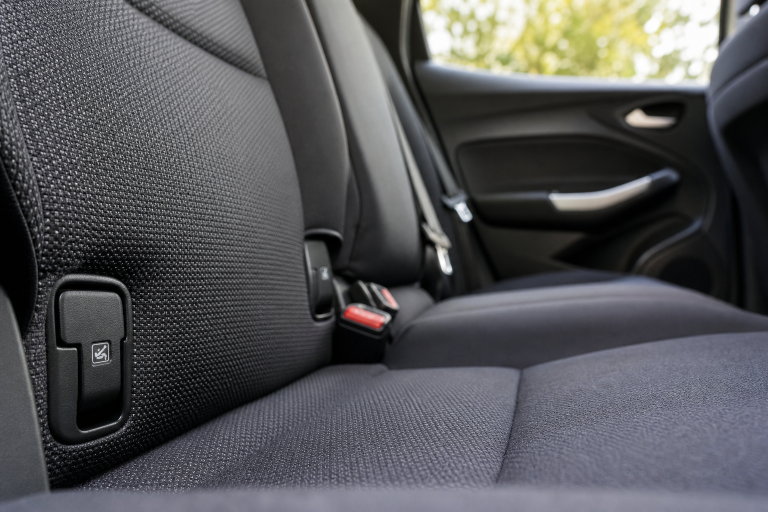
Bring your actual car seat or booster seat when inspecting a vehicle whenever possible. Check the lower anchors, top-tether locations, seat-belt path, buckle accessibility, and front-to-back room with the seat installed. A cabin can look roomy yet still make rear-facing seats, multiple boosters, or three-across arrangements difficult to manage.
Wide rear doors, sliding doors, low step-in heights, and accessible third-row entry can make a meaningful difference every day. Follow child passenger safety guidance by using restraints appropriate for a child’s age and size, and by confirming installation requirements in both the vehicle and car-seat manuals.
Choose Flexible Storage Solutions
Cargo capacity numbers are useful, but the shape of the area often matters more. A square, low-loading cargo space may hold a stroller and grocery bags more effectively than a larger space with a narrow opening or sloped rear glass. Test fold-flat seats, split-fold configurations, under-floor storage, and the effort needed to access each area.
Small Details That Add Up
- Door pockets for wipes, water bottles, and small essentials.
- Covered consoles to keep valuables and clutter out of sight.
- Cargo hooks, nets, and bins that stop bags from rolling around.
- Washable mats and durable surfaces for muddy shoes, spills, and pets.
- A hands-free liftgate when loading children or carrying bulky items.
Prioritize Comfort and Climate Control
Rear air vents, separate climate controls, sunshades, supportive seating, adjustable head restraints, cup holders, reading lights, and reachable charging ports can improve everyday rides. Quiet cabins are especially valuable on longer trips, when road noise and constant conversation can wear on drivers and passengers alike.
Simple controls deserve attention. A large touchscreen may look impressive, but physical buttons or clear shortcuts for temperature, defrosting, volume, and camera views can be easier to use quickly. Make sure rear passengers can reach their own vents, ports, and cup holders without needing help at every stop.
Use Connectivity Without Added Distraction
Wireless smartphone connection, voice commands, built-in navigation, rear-seat entertainment, and multiple charging options can help families stay organized. Set up driver profiles, frequent destinations, playlists, and phone connections before leaving the driveway. This reduces the temptation to work through menus while moving.
Technology should lower mental workload, not create a new one. Choose systems that respond reliably and keep important information easy to see. If rear entertainment or internet access is available, use parental controls and establish clear screen-time expectations before a long drive begins.
Prepare for Road Trips and Weather Changes
For families who travel often or face snow, heavy rain, gravel roads, or steep terrain, traction control, suitable tires, all-wheel drive, or four-wheel drive may be relevant. Even so, capable hardware does not replace good tires, appropriate maintenance, safe following distances, and cautious driving in poor weather.
Also consider fuel range or charging access, roof rails, trailer equipment, cargo covers, seating comfort, and the room available after everyone packs. Keep a basic emergency kit with water, blankets, first-aid supplies, a flashlight, phone cables, and simple tools.
Test the Features Before Buying
- Bring car seats, booster seats, backpacks, and a stroller if possible.
- Open every door and check the step-in height for children and adults.
- Fold and return every seat to see how much force and coordination it takes.
- Try cameras, sensors, voice commands, climate controls, and cargo access.
- Have every regular driver adjust the seat, mirrors, and steering wheel.
- Drive on roads that resemble your normal routes, including parking lots.
Make the Final Choice With Real Life in Mind
The best family vehicle is usually the one that handles ordinary life with the fewest compromises. Compare safety, storage, comfort, operating costs, and ease of use together. Features that work well every school morning, grocery trip, and road trip will matter far more than options that only look impressive on a feature list.